
When Do Puppies Lose Their Baby Teeth and How to Help Them Through It
Puppies typically begin losing their baby teeth around 3 to 4 months of age and finish the process by 6 to 7 months, when their 42 permanent adult teeth come in. Pet parents can help by offering safe chew toys, frozen washcloths, and scheduling regular dental checkups during this developmental stage.
Watching a new puppy grow into an adult dog brings plenty of milestones. One of the most surprising for many pet owners is finding a tiny tooth on the floor or tucked inside a chew toy. The teething process can leave your furry friend with sore gums, a strong urge to chew household items, and a few behavioral quirks. Knowing what to expect helps you support your pup through this short but messy phase.
When Do Puppies Lose Their Baby Teeth?
Puppies follow a fairly predictable teething schedule, though small variations between breeds are normal. Their deciduous teeth, often called milk teeth or baby teeth, push through the gums first and then fall out to make room for permanent adult teeth.
Puppy Teething Timeline
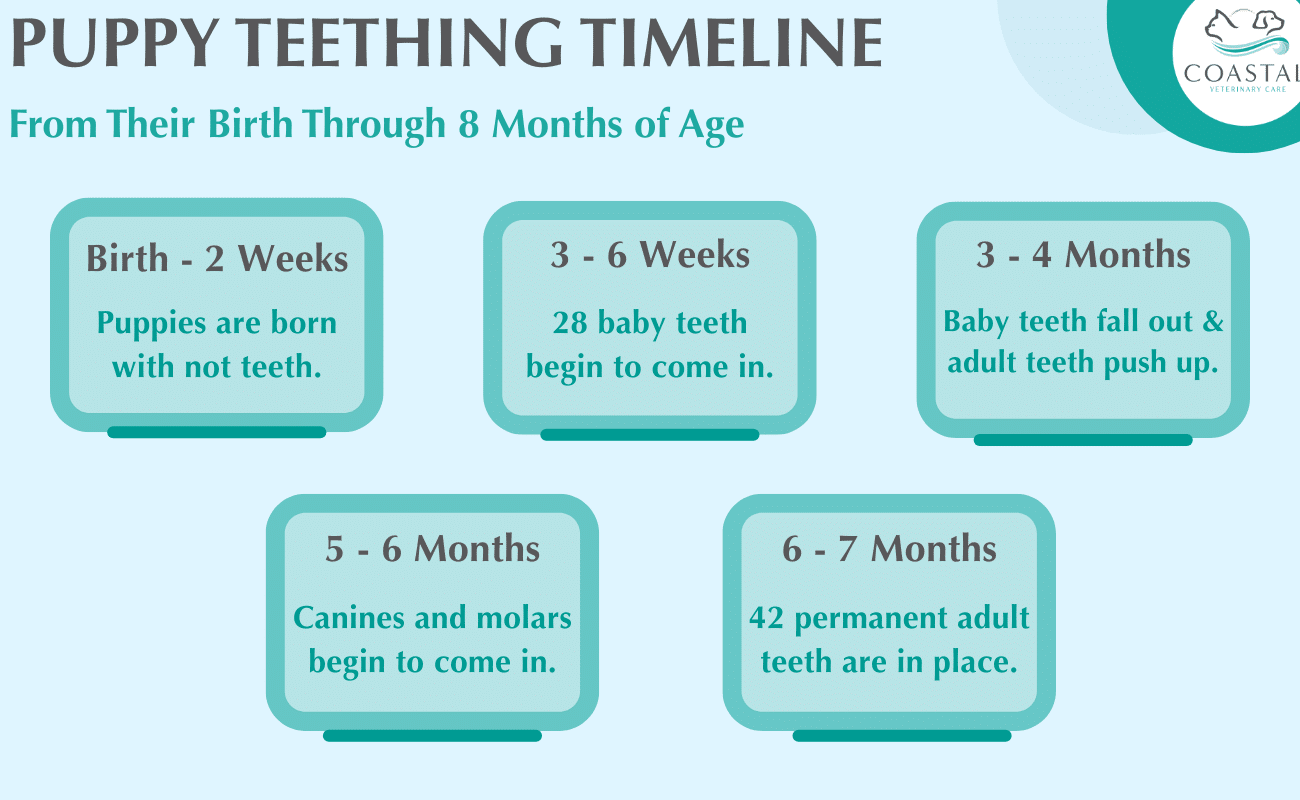
Here is the general progression most puppies follow from birth through 8 months of age:
- Birth to 2 weeks of age: Puppies are born without teeth, much like a human baby.
- 3 to 6 weeks of age: The 28 deciduous teeth begin erupting through the puppy’s mouth.
- 3 to 4 months of age: Baby teeth start falling out as adult teeth push up underneath.
- 5 to 6 months of age: Canines and molars come in, often the most uncomfortable phase.
- 6 to 7 months of age: Most pups have all 42 permanent adult teeth in place.
If you still see baby teeth alongside adult teeth past 8 months of age, your veterinarian will want to take a closer look.
Why You May Never Find the Lost Teeth
Many pet owners never spot a single missing tooth. Puppies often swallow tiny teeth during meals or while chewing on toys, which is harmless. A small amount of blood on a chew toy or in the water bowl during this period is also normal and rarely a cause for concern.
What Are the Signs of Puppy Teething?
Teething puppies show a mix of physical and behavioral signs as their adult tooth set comes in. Most signs are mild, but a few warrant a closer look from your veterinarian.

Common Teething Behaviors
- Increased chewing on household items: Your puppy may target your favorite shoes, furniture legs, or anything within reach.
- Drooling more than usual: Sore gums often cause extra saliva production.
- A high-pitched yelp when chewing: Pressure on a loose baby tooth can cause brief discomfort.
- Mild bad breath: Small amounts of blood and tissue around erupting adult teeth can give off a faint odor.
- Reduced appetite: Some puppies eat less for a day or two when new teeth are coming in.
When to Call Your Veterinarian
Most teething signs pass quickly. Contact Coastal Veterinary Care if you notice excessive bleeding, facial swelling, fever, or your puppy refusing food for more than 24 hours. Persistent bad breath after teething ends can also point to an early dental problem.
How Do You Help a Teething Puppy?
Helping a teething puppy is mostly about giving them appropriate outlets to chew, soothing sore gums, and protecting your home from destructive chewing.
Safe Chew Toys and Dental Chews
Offer a rotation of safe chew toys made from soft rubber or nylon designed for puppies. Avoid hard items like cow hooves, antlers, and ice cubes, since they can fracture a puppy’s teeth. A good dental chew can also help reduce plaque while soothing the gums. Look for products carrying them Veterinary Oral Health Council seal for added peace of mind.
Simple At-Home Comfort Tricks
- Frozen washcloth: Soak a clean washcloth in water, wring it out, then freeze it. The cold helps numb sore gums.
- Refrigerated rubber toys: Chilled appropriate toys feel especially good on tender gums.
- Frozen puppy treats: Small frozen carrots or vet-approved teething treats give safe relief.

Redirect Destructive Chewing
When your pup goes after a household item, redirect them to an approved toy. Use positive reinforcement when they make the right choice. Consistent redirection during this developmental stage builds healthy chewing habits that last into adulthood. Puppy-proofing the home also helps. Tuck shoes and remote controls out of reach, block off rooms with valuable items, and keep small objects off the floor to prevent accidental swallowing.
What Dental Issues Should Pet Parents Watch For?
Most puppies move through teething without complications, but a few dental issues can appear during these months.
Retained Baby Teeth
Sometimes a baby tooth does not fall out when the adult tooth erupts. This is called a retained deciduous tooth. It is most common in small breeds like Yorkshire Terriers, Pomeranians, and toy poodles. Retained teeth crowd the dog’s mouth, trap food particles, and can lead to periodontal disease if left in place. We can remove retained baby teeth, often during a spay or neuter procedure to limit anesthesia events.
Bite and Alignment Problems
Watch how your puppy’s teeth fit together. If the upper and lower jaw look misaligned, or if any tooth presses into the opposite gum, schedule a dental exam. Early intervention often prevents long-term oral health issues and reduces the risk of fractured teeth later in life.
Building Long-Term Dental Care Habits

Brushing your dog’s teeth two to three times a week with pet-safe toothpaste is one of the best habits you can start during the teething phase. 80 to 90 percent of dogs over age 3 have some form of periodontal disease, so early dental care pays off. Pair brushing with regular professional cleanings to keep healthy teeth in place for life.
Coastal Veterinary Care: Your Partner in Puppy Dental Health
The teething phase moves quickly, but the dental care habits your puppy learns now shape their oral health for years to come. Our Myrtle Beach team supports pet parents through each developmental stage with fear-free, low-stress visits, same-day diagnostics, and clear guidance on what to expect next.
If your pup is showing signs of teething trouble, you have questions about retained baby teeth, or you simply want to start a dental care plan, our team is ready to help. Schedule a wellness visit with Coastal Veterinary Care today and give your furry friend the foundation for a lifetime of healthy teeth.
Do puppies cry when losing baby teeth?
Most puppies do not cry when losing baby teeth, though some give a brief high-pitched yelp when biting down on a loose tooth. Ongoing crying or whining warrants a veterinary visit.
How long does puppy teething last?
Puppy teething typically lasts from 3 weeks of age until 6 to 7 months of age. The heaviest chewing usually happens between 3 and 5 months.
Is it safe for puppies to swallow their baby teeth?
Yes, swallowing a tiny tooth is normal and harmless. The baby tooth passes through the digestive system without issue.
When should I start brushing my puppy's teeth?
Start brushing as soon as the permanent adult teeth come in, around 6 to 7 months of age. Use a soft brush and pet-safe toothpaste for best results.
Choose Coastal Veterinary Care in Myrtle Beach, SC
At Coastal Veterinary Care, we can help you determine an appropriate veterinary schedule that best supports your pet’s needs. From planning regular routine visits to understanding what to look for to identify when your pet may need to be seen to evaluate a specific injury or illness, we are here to help you make sure your pet gets the best possible care. Contact us today to learn more about why we are a trusted choice among pet owners in the Myrtle Beach, SC, area or to schedule an appointment!