
How Much Food Should a Kitten Eat? Feeding Chart and Tips for Healthy Growth
Kittens need about 2 to 4 small meals daily, with portion sizes based on age and weight. Most kittens require 2 to 3 times more calories per pound than adult cats to support their rapid growth.
Feeding a new kitten the right amount of food matters more than many pet parents realize. Underfeeding can slow healthy growth, while overfeeding leads to digestive upset and weight problems later in life. Every kitten has unique nutritional needs that change quickly during their first year of life.
Quick Tips for Feeding a Kitten
- Choose kitten-specific food: Stick to food labeled specifically for kittens until your cat reaches 12 months of age.
- Measure every portion: Use a standard kitchen measuring cup rather than estimating amounts by eye.
- Refresh water daily: Offer fresh water every day and wash bowls regularly to prevent bacteria buildup.
- Watch body condition: Monitor your kitten’s body shape and energy, not just the scale, to gauge healthy growth.
How Much Should a Kitten Eat by Age?
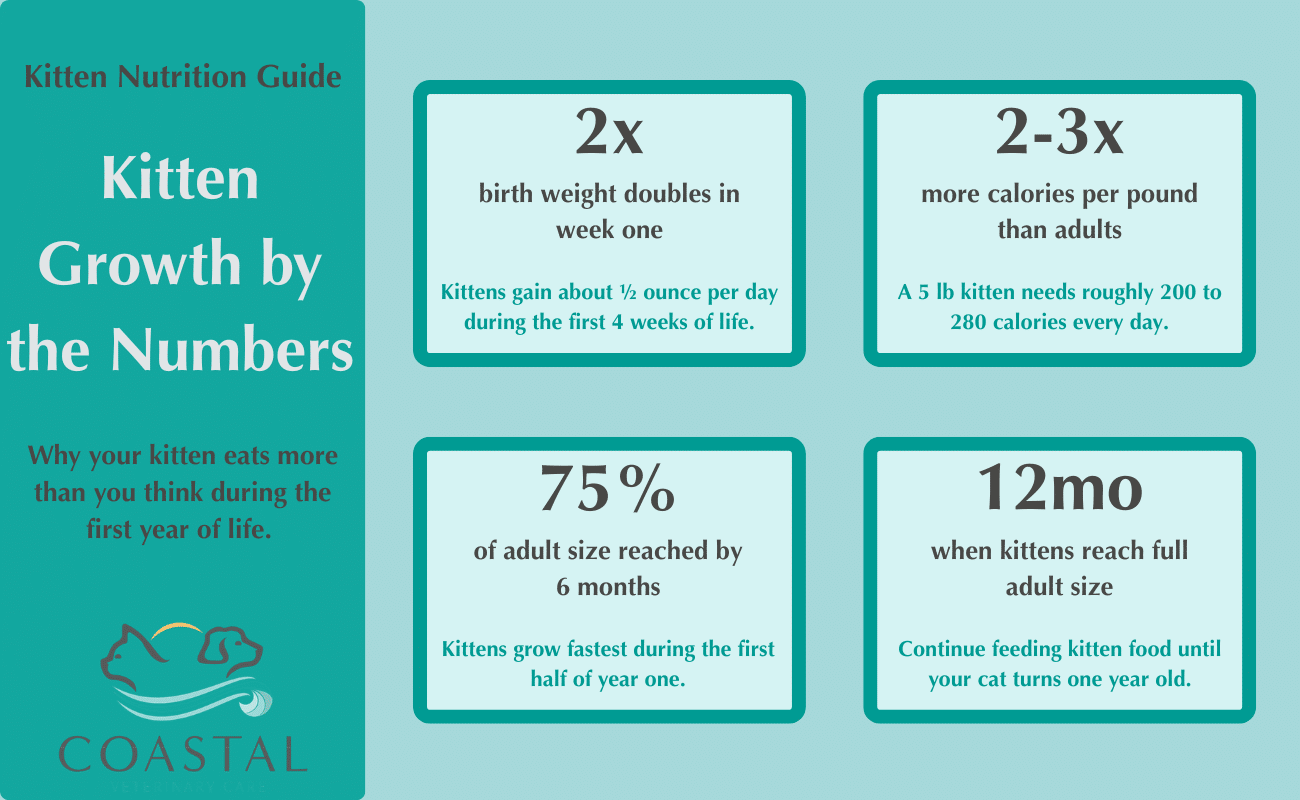
Kitten feeding amounts depend on age, weight, and the type of food you offer. Most kittens double their weight in the first week of life and continue growing rapidly through 12 months. Use this kitten feeding chart to guide portion sizes at each stage of your cat’s diet.
Newborn to 4 Weeks
Newborn kittens rely entirely on mother’s milk or kitten milk replacer. If you are bottle feeding, offer 8 milliliters of kitten formula per ounce of body weight daily, split across feedings every 2 to 3 hours. Never give cow’s milk, which causes digestive issues in young kittens.
4 to 8 Weeks
Weaning begins around 4 weeks of age. Mix wet kitten food with warm water or milk replacer to create a soft mash. Offer small meals 4 to 6 times daily, gradually reducing the liquid until your kitten eats solid food on its own.
2 to 6 Months
At this stage, kittens eat about 1/3 to 3/4 cup of dry kitten food per day, split into 3 to 4 frequent meals. Wet food can supplement dry kibble at roughly 3 to 4 ounces per pound of body weight daily.
6 to 12 Months
Older kittens need 1/2 to 1 cup of dry food daily, divided into 2 to 3 meals. Continue feeding high-quality kitten food until 12 months, when most cats transition to adult cat food.
What Should You Feed Your Kitten?
Choosing the right food shapes your kitten’s diet for life. Cats are obligate carnivores, meaning they need animal protein and specific amino acids like taurine. A balanced diet during the first year supports brain development, strong bones, and a healthy immune system.
Wet Food vs Dry Food
Both wet kitten food and dry kibble offer benefits. Wet food provides moisture and is easier to chew for young kittens. Dry kitten food supports dental health and is convenient for portioning small amounts. Many veterinarians recommend mixing both to balance hydration and texture variety in your cat’s nutritional needs.
What to Look For in High-Quality Kitten Food
Quality kitten food should list a named animal protein, like chicken or salmon, as the first ingredient. Look for foods labeled “complete and balanced” by AAFCO standards for growth and reproduction. Fatty acid sources like fish oil support coat and brain health, while added DHA promotes vision and cognitive development during rapid growth.

What to Avoid
Skip dairy products, raw fish, and adult food during the first year. Adult cat food lacks the calorie content and protein levels kittens need. Cow’s milk and other dairy products often cause digestive upset in young cats because kittens lack the enzymes to break down lactose properly.
How Often Should Kittens Eat?
A consistent kitten feeding schedule supports healthy digestion and steady weight gain. Younger kittens need frequent meals because their small stomachs cannot hold large portions. As they grow, you can space meals further apart while monitoring their daily calorie intake.
Here is a basic kitten feeding guide based on age:
- Under 4 weeks: Bottle feeding every 2 to 3 hours, around the clock.
- 4 to 8 weeks: 4 to 6 small meals per day of wet food mash.
- 2 to 4 months: 4 meals per day of wet and dry food.
- 4 to 6 months: 3 meals per day with steady portion sizes.
- 6 to 12 months: 2 to 3 meals per day, transitioning toward adult feeding patterns.
Always provide fresh water alongside meals. Hydration matters for kidney health and overall growth, especially if your kitten eats mostly dry cat food. Place water bowls away from food and litter areas to encourage drinking.
Common Kitten Feeding Mistakes to Avoid
Even well-meaning pet parents can run into feeding problems. Watching for these common mistakes helps you support your kitten’s healthy growth and avoid setbacks during the first year.
Overfeeding or Free-Feeding Too Early
Leaving food out all day works for some adult cats, but young kittens benefit from measured portions. Free-feeding can lead to weight gain and picky eaters later. Stick to scheduled meals during the first 6 months to build healthy habits.
Switching Foods Too Quickly
Sudden changes in your kitten’s diet often cause digestive upset. When changing brands or formulas, mix the old and new food gradually over 7 to 10 days. This protects your kitten’s stomach during the transition.
Giving Adult Food Too Soon
Kitten formula contains higher protein, fat, and calorie content than adult cat food. Switching too early can leave your kitten short on the proper nutrition needed for healthy growth and development.
Ignoring Weight Changes
Track your kitten’s weight weekly during the first few months. Sudden weight loss or gain can signal health issues that need veterinary attention right away. A small kitchen scale works well for accurate weekly readings.
Coastal Veterinary Care: Your Partner in Kitten Nutrition

Building healthy feeding habits early sets your kitten up for a long, happy life. Every kitten grows at their own pace, and questions about portion sizes, food choices, or feeding schedules are completely normal. Our fear-free certified team understands how much care goes into raising a new kitten.
At Coastal Veterinary Care in Myrtle Beach, we work alongside pet parents to create personalized nutrition plans for kittens at every stage. From your first wellness visit to ongoing growth checks, we offer same-day diagnostics, clear education, and compassionate support tailored to your kitten’s needs.
If you have questions about your kitten’s diet or want a tailored feeding plan, contact our office today. We are here to help your kitten grow into a healthy, happy adult cat.
How much wet food should a kitten eat per day?
Most kittens need about 3 to 4 ounces of wet kitten food per pound of body weight daily, split across 3 to 4 meals.
Can kittens eat adult cat food?
No. Kittens need higher protein, fat, and calorie content than adult cat food provides. Wait until 12 months before transitioning to adult food.
When should kittens stop eating kitten food?
Kittens typically transition to adult cat food around 12 months of age, once their rapid growth phase slows down.
Is dry or wet kitten food better?
Both have benefits. Wet food adds hydration and is easy to chew, while dry kibble supports dental health. Many veterinarians recommend offering both.
Choose Coastal Veterinary Care in Myrtle Beach, SC
At Coastal Veterinary Care, we can help you determine an appropriate veterinary schedule that best supports your pet’s needs. From planning regular routine visits to understanding what to look for to identify when your pet may need to be seen to evaluate a specific injury or illness, we are here to help you make sure your pet gets the best possible care. Contact us today to learn more about why we are a trusted choice among pet owners in the Myrtle Beach, SC, area or to schedule an appointment!