
How to Tell If My Cat Has Worms: Common Signs and Symptoms
Cats with worms often show symptoms like weight loss, a bloated belly, vomiting, diarrhea, or visible worm segments near their tail. If you notice any of these signs, a stool sample and visit to your veterinarian can confirm the diagnosis and get your cat on the right track.
Worms are one of the most common health issues cats face, yet many pet parents don’t catch them early because the signs can be subtle. Indoor cats aren’t immune, either. Multiple types of worms can infect a cat’s body, and some can even spread to humans or young children. Knowing what to look for puts you in the best position to protect your cat and your household.
Types of Worms That Affect Cats
Not all intestinal parasites are the same. Understanding the types of worms your cat might encounter helps you recognize the right warning signs.
Roundworms
Roundworm infection is the most common worm infestation in cats, especially kittens. These white worms live in the cat’s intestines and can be passed from a mother to her kittens through mother’s milk. Cats can also swallow roundworm eggs from contaminated soil or infected animals.
Tapeworms
Cat tapeworms are flat, segmented parasites. Dipylidium caninum is the most common species in the United States. Cats get tapeworms by swallowing an infected flea during grooming. The tapeworm uses the flea as an intermediate host before developing inside the cat’s intestines. A tapeworm infection is often identified by tapeworm segments, which look like small grains of rice, near the cat’s rear or in their bedding. Tapeworm eggs are released when these segments dry out.
Hookworms
Hookworms are small but can cause significant harm. They attach to the lining of the cat’s intestines using hook-like mouthparts and feed on blood. Hookworm larvae can infect a cat through the skin or mouth. Severe cases in kittens can cause anemia. These parasites can also affect humans through skin contact with contaminated soil.
Heartworms
Heartworm disease is spread through mosquito bites, not direct contact with other animals. Unlike intestinal worms, heartworms live in the heart and lungs. While less common in cats than dogs, heartworm disease in cats can be severe and difficult to manage. Prevention through heartworm medications is far safer than managing an infection after the fact.
Signs and Symptoms of Worms in Cats
Learning how to tell if your cat has worms means knowing both the obvious and the easy-to-miss clinical signs.
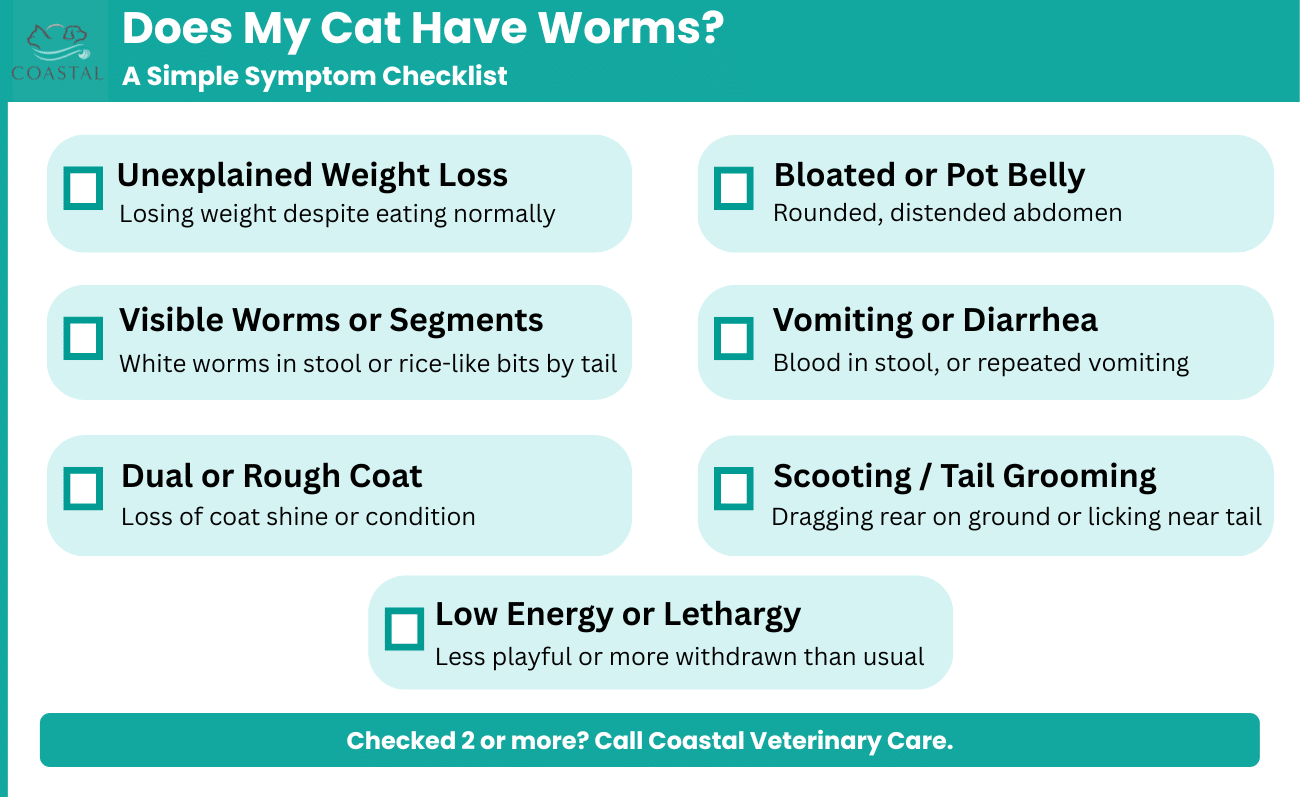
Visible Signs
Some symptoms are easy to spot:
- Tapeworm segments near the tail or in bedding: These look like small grains of rice and may be moving when fresh.
- White worms in stool or vomit: Roundworms are sometimes passed this way, especially in kittens.
- Bloated belly: A rounded, distended abdomen is common in kittens with heavy worm loads.
Behavioral and Physical Changes
Other symptoms of worms are less obvious but worth watching for:
- Weight loss: An infected cat may lose weight despite eating normally, because adult worms compete for nutrients.
- Dull or rough coat: Poor coat condition often signals a nutritional deficiency caused by internal parasites.
- Lethargy or low energy: An infected cat may seem less playful or more withdrawn than usual.
- Scooting or excessive grooming near the tail: This can signal irritation from tapeworm segments.
- Changes in cat’s stool: Diarrhea, soft stools, or blood in the stool are all possible signs.
When Symptoms Are Absent
Some cats, particularly adult cats with light infections, show no outward symptoms at all. This is why regular stool sample testing matters even when your cat seems healthy. An indoor cat may have fewer exposures, but contact with fleas, soil tracked indoors, or even prey animals can still introduce infective larvae or worm eggs.
How Cats Get Worms
Understanding transmission helps reduce risk and catch infections faster. Cats most commonly pick up intestinal worms in these ways:
- Ingesting infected fleas: The primary route for tapeworm infection. Even a single infected flea swallowed during grooming can lead to a tapeworm infection.
- Contact with contaminated soil or feces: Roundworm eggs and hookworm larvae can survive in the environment for months. A cat that goes outdoors or hunts is at higher risk.
- Eating an infected animal: Hunting cats can ingest immature worms or tapeworm egg packets by eating rodents or birds that serve as intermediate hosts.
- Mother’s milk: Kittens can receive roundworms through nursing, which is why deworming protocols begin early in life.
- Mosquito bites: The only transmission route for heartworm disease.
Diagnosing Worms in Cats
If you suspect a worm infestation, a veterinary visit is the right next step. A diagnosis typically involves:
- Stool sample analysis: Your vet examines the cat’s stool under a microscope to identify worm eggs or adult worm segments.
- Physical exam: Your vet will assess the cat’s body condition, coat quality, and abdomen for signs of parasites.
- Blood testing: Used to detect heartworm disease, since heartworms don’t appear in stool samples.
Bringing a fresh stool sample to your appointment makes the process faster and more accurate.
At Coastal Veterinary Care, same-day lab results mean you don’t have to wait days to find out what’s affecting your cat.
Treatment and Prevention of Cat Worms
Treatment Options
Most intestinal worms respond well to deworming medication. Oral medications are the most common form, though some treatments come as topical applications. The type of deworming medication used depends on the specific parasite:
- Roundworm and hookworm infections are typically treated with broad-spectrum dewormers.
- Tapeworm infection requires a medication specifically targeting tapeworms, such as praziquantel.
- Heartworm disease in cats currently has no approved treatment, which makes prevention the only option.
Prevention Tips
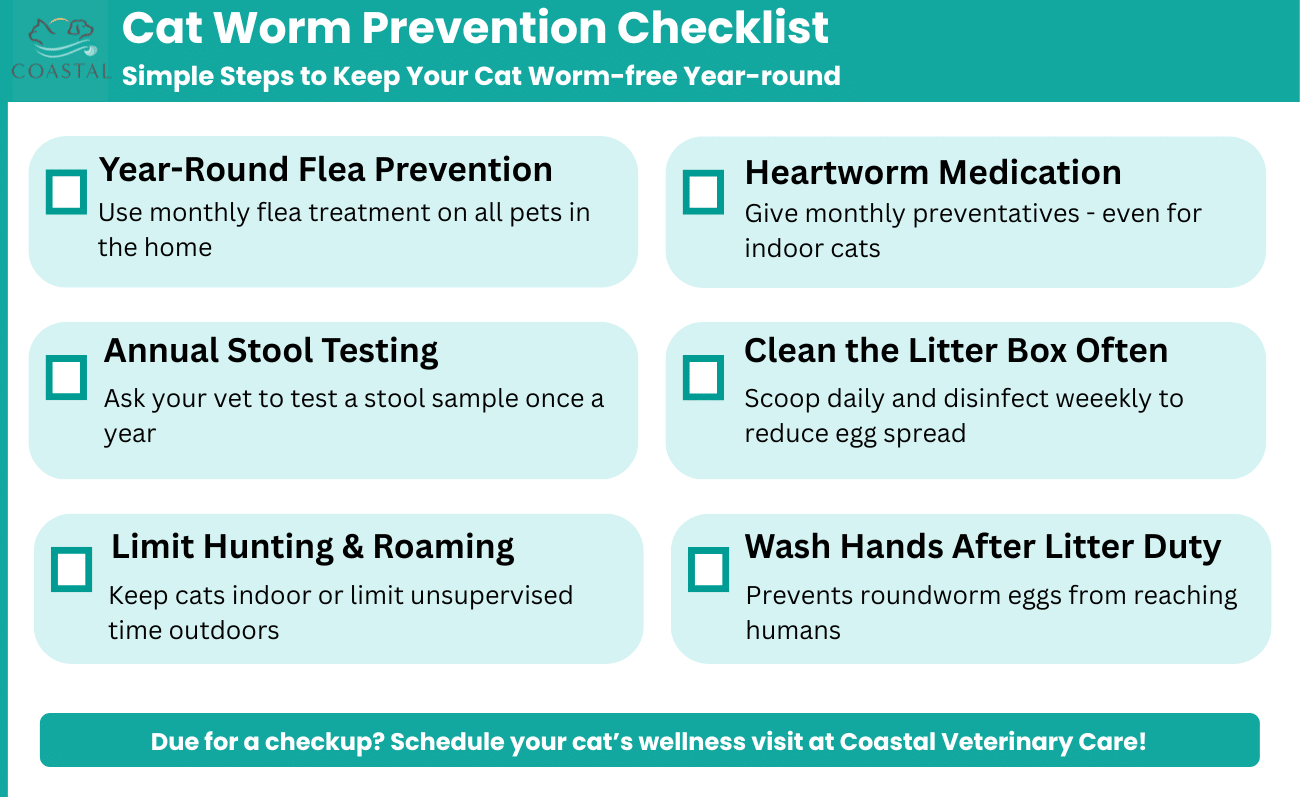
Keeping your cat worm-free long-term comes down to consistent prevention:
- Use year-round flea prevention: Since infected fleas are the main source of cat tapeworms, controlling fleas controls tapeworm risk.
- Keep up with heartworm medications: Monthly preventatives protect cats from heartworm disease transmitted through mosquito bites.
- Schedule routine wellness exams: Annual or semi-annual stool sample testing catches infections before they become severe cases.
- Practice good hygiene: Clean litter boxes regularly and wash hands after handling cat’s poop to reduce the chance of spreading worm eggs to humans.

Coastal Veterinary Care: Your Partner in Cat Parasite Prevention
Knowing how to tell if your cat has worms is the first step. Getting the right diagnosis and treatment is what protects your cat’s long-term health. Whether you’ve spotted a symptom of worms or just want peace of mind, Coastal Veterinary Care in Myrtle Beach is ready to help.
Our team offers same-day lab results, so you won’t be left waiting and wondering. We take a fear-free approach to every visit, making the experience calm for your cat and clear for you. If you suspect a worm infestation or it’s been a while since your cat’s last wellness check, contact our office to schedule an appointment.
Every dog is different, and what works for one pet may not work for another. A conversation with your vet can help you build the right plan
Can an indoor cat get worms?
Yes. Indoor cats can still be exposed to worms through fleas brought inside on clothing or other pets, contact with contaminated soil tracked indoors, or by hunting insects. Regular stool sample testing is a good idea even for cats that never go outside.
What do cat worms look like in poop?
Roundworms look like white worms, similar to spaghetti, and may appear in a cat’s poop or vomit. Tapeworm segments, which look like small grains of rice, are often found near the cat’s rear or in bedding rather than inside the stool itself.
Can cat worms spread to humans?
Some cat worms can affect humans. Roundworm eggs can cause illness if accidentally ingested, which is why good hygiene around the litter box matters. Young children are especially vulnerable. Hookworm larvae can also penetrate human skin through contact with contaminated soil.
How often should I deworm my cat?
The frequency depends on your cat’s lifestyle and risk level. Cats with outdoor access or a history of worms may need more frequent deworming medication. Your vet can recommend a schedule based on your cat’s individual needs and annual stool sample results.
Choose Coastal Veterinary Care in Myrtle Beach, SC
At Coastal Veterinary Care, we can help you determine an appropriate veterinary schedule that best supports your pet’s needs. From planning regular routine visits to understanding what to look for to identify when your pet may need to be seen to evaluate a specific injury or illness, we are here to help you make sure your pet gets the best possible care. Contact us today to learn more about why we are a trusted choice among pet owners in the Myrtle Beach, SC, area or to schedule an appointment!