
Cat Asthma Symptoms: How to Recognize and Respond Early
The Short Answer: Cat asthma symptoms include wheezing, rapid breathing, open-mouth breathing, and persistent coughing that sounds like hacking or gagging. Early recognition allows for prompt treatment that can prevent serious respiratory distress and help your feline friend breathe comfortably.
Watching your cat struggle to breathe is alarming for any pet parent. Feline asthma affects approximately 1-5% of cats, making it one of the most common respiratory conditions in our feline companions. This chronic respiratory condition causes inflammation and narrowing of your cat’s airways, leading to breathing difficulties that range from mild wheezing to severe asthma attacks. Understanding cat asthma symptoms helps you respond quickly and work with your veterinarian to manage this progressive condition effectively.
Recognizing Common Cat Asthma Symptoms
Cat asthma symptoms can appear suddenly or develop gradually over time. Learning to identify these warning signs early gives your cat the best chance for effective treatment and a good quality of life.
Breathing Changes to Watch For
Healthy cats typically take 24 to 30 breaths per minute while resting. When asthma affects your cat’s lungs, you may notice several changes in their breathing patterns:
- Rapid breathing: Your cat may breathe faster than normal, even while resting or sleeping.
- Wheezing: A whistling or rattling sound when your cat breathes out indicates airway narrowing.
- Open-mouth breathing: Cats normally breathe through their nose. Mouth breathing signals difficulty breathing and requires immediate attention.
- Labored breathing: You might see your cat’s sides moving more than usual with each breath, showing increased respiratory effort.
The Characteristic Asthma Cough
Many cat owners mistake asthma coughing for hairball attempts. The asthmatic cat often crouches low with neck extended, making hacking or gagging sounds. Unlike hairball coughing, an asthma cough produces no hairball and may occur frequently throughout the day. Your cat’s breathing may seem normal between coughing episodes during early stages of the condition.
Behavioral and Physical Signs
Beyond obvious breathing symptoms, asthmatic cats often show subtle changes in behavior. Your cat may become less playful or tire quickly during activity. Some cats hide more frequently or seem anxious. You might notice your cat breathing with their mouth open after minimal exertion. Lethargy and decreased appetite can accompany more severe cases.
What Triggers Asthma Attacks in Cats
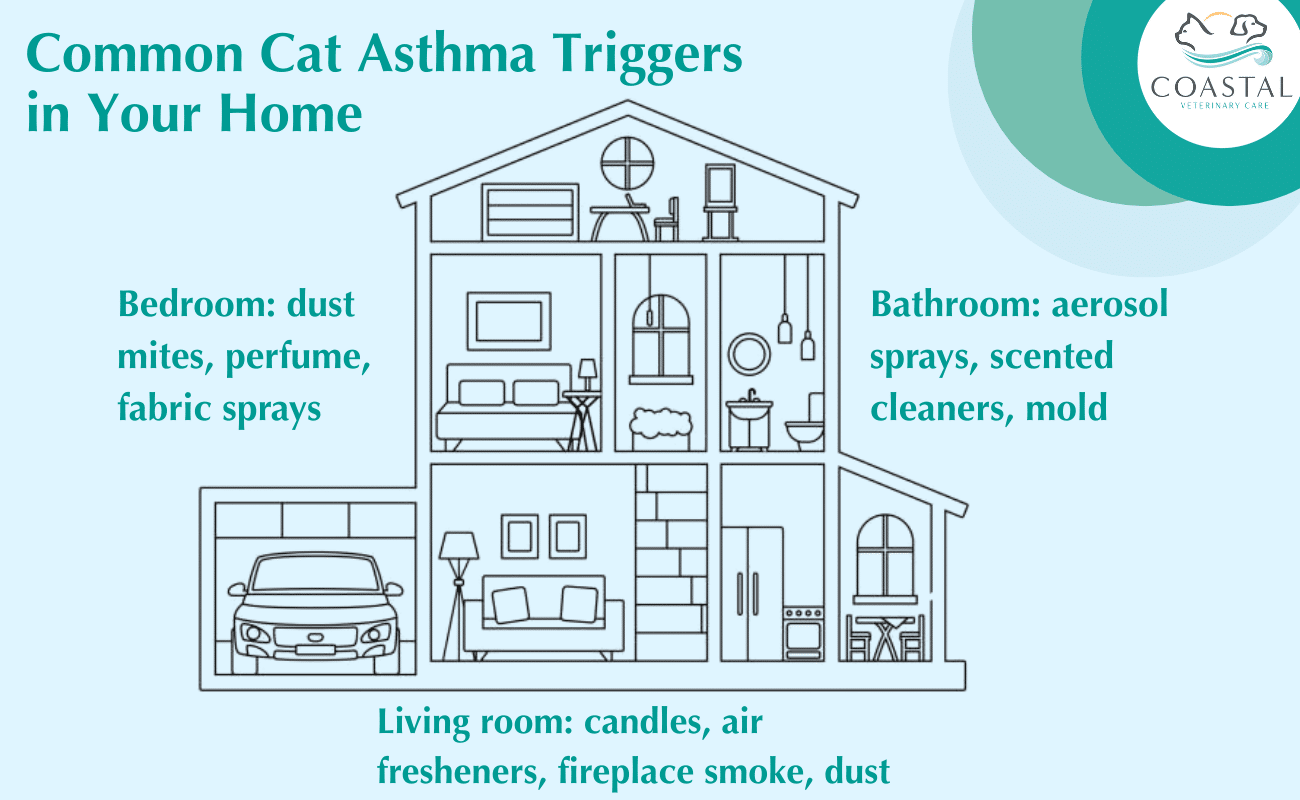
Feline asthma is primarily an allergic reaction. When your cat inhales allergens, their immune system overreacts, causing inflammation that narrows the airways. Understanding common triggers helps you reduce your cat’s exposure and minimize periodic flare-ups.
Environmental Allergens
The most common allergens that trigger asthma attacks in cats include:
- Cigarette smoke: Secondhand smoke is extremely irritating to your cat’s airways and can trigger severe reactions.
- Dust and dust mites: Common household dust contains particles that irritate sensitive airways.
- Pollen: Seasonal allergens can worsen symptoms during certain times of year.
- Mold spores: Indoor mold growth releases spores that can trigger allergic asthma.
- Scented products: Air fresheners, candles, and strong cleaning products often worsen symptoms.
- Cat litter dust: Dusty litters can irritate your cat’s respiratory system with each bathroom visit.
Other Contributing Factors
While allergic reaction is the primary cause, other factors influence your cat’s asthma. Genetic predisposition plays a role, with some cats more prone to developing the condition. Stress levels can worsen symptoms, as anxiety affects immune response. Respiratory infections may trigger initial symptoms or cause flare-ups. Maintaining a healthy weight is important because excess weight puts additional strain on your cat’s respiratory system.
When Symptoms Become an Emergency
While mild symptoms of asthma can often wait for a regular veterinary appointment, a full-blown asthma attack requires immediate action. Knowing the difference could save your cat’s life.
Signs of a Severe Asthma Attack
Seek emergency care immediately if your cat shows these symptoms:
- Blue-tinged gums or tongue: This indicates your cat is not getting enough oxygen and needs immediate help.
- Extreme difficulty breathing: Your cat may gasp, wheeze loudly, or struggle with each breath.
- Collapse or extreme weakness: Lack of oxygen can cause your cat to become unresponsive.
- Panic or distress: Cats who cannot breathe often show obvious signs of fear and anxiety.
If your cat experiences these severe symptoms, transport them to the nearest animal emergency hospital immediately. Keep your cat calm during transport, as stress worsens breathing difficulties. If your cat has a pre-existing heart condition, respiratory emergencies require extra caution.

Monitoring Between Episodes
Track your cat’s breathing rate regularly to establish a baseline. Count breaths for 30 seconds while your cat rests and multiply by two. A consistent increase above 30 breaths per minute warrants a veterinary visit. Keep notes on symptom frequency, potential triggers, and any changes in your cat’s behavior to share with your veterinarian.
Diagnosis and Treatment Options
Proper diagnosis requires veterinary examination because other conditions can mimic cat asthma symptoms. Your veterinarian will work to confirm asthma and rule out other respiratory problems.
Diagnostic Procedures
Veterinarians use several tools to diagnose feline asthma. Chest x-rays reveal characteristic patterns in your cat’s lungs, showing inflammation and airway changes. In some cases, bronchoalveolar lavage may be performed to collect samples from the airways for analysis. Allergy testing can help identify specific triggers, though it is not always necessary for treatment. Your vet may also check for chronic bronchitis, heartworm disease, and other conditions that cause similar symptoms.
Managing Your Cat’s Asthma
Treatment focuses on reducing inflammation and opening airways. Common approaches include:
- Corticosteroid medication: These reduce inflammation in your cat’s airways. Options include oral medication, injections, or inhaled treatments.
- Bronchodilators: These medications help open narrowed airways during flare-ups.
- Inhaler therapy: Many cats learn to accept inhalers with special feline masks, allowing direct delivery of appropriate medication to the lungs.
- Environmental management: Reducing allergen exposure in your home helps prevent attacks.
Your veterinarian will recommend the appropriate medication based on your cat’s specific needs and severity of symptoms. Because asthma is a progressive condition, ongoing management and regular check-ups help maintain your cat’s quality of life.

Coastal Veterinary Care: Your Partner in Feline Respiratory Health
Living with an asthmatic cat requires a little extra care, but most cats with asthma enjoy comfortable, active lives with proper management. The key is early recognition of symptoms, identification of triggers, and consistent treatment. Working closely with a veterinary team you trust makes managing this chronic respiratory condition much easier for both you and your feline friend.
At Coastal Veterinary Care in Myrtle Beach, our compassionate team understands how worrying respiratory symptoms can be for pet parents. We offer same-day lab results and digital cytology to help diagnose your cat’s condition quickly. Our fear-free certified approach means your cat receives care in a low-stress environment, which is especially important for cats with breathing difficulties where stress can worsen symptoms.
If you notice any symptoms of asthma in your cat, from occasional coughing to difficulty breathing, contact our office to schedule an appointment. New patients are always welcome, and we are here to provide you with the education and support you need to help your cat breathe easier.
Choose Coastal Veterinary Care in Myrtle Beach, SC
At Coastal Veterinary Care, we can help you determine an appropriate veterinary schedule that best supports your pet’s needs. From planning regular routine visits to understanding what to look for to identify when your pet may need to be seen to evaluate a specific injury or illness, we are here to help you make sure your pet gets the best possible care. Contact us today to learn more about why we are a trusted choice among pet owners in the Myrtle Beach, SC, area or to schedule an appointment!