
Stages of Dog Pregnancy: How to Care for Your Expecting Pup
Whether your dog’s pregnancy was planned or a surprise, knowing what to expect during the gestation period can help you support your expecting pup. From the earliest signs of pregnancy to preparing for birth, each stage brings unique changes to your dog’s body and behavior. This guide walks you through the entire canine pregnancy timeline so you can give your pregnant dog the care she needs.
How Long Is a Dog Pregnant?
The average gestation period for dogs is 63 days from ovulation, though this can vary by a few days depending on when fertilization occurred. Because pinpointing the exact fertilization date can be difficult, pregnancies may appear to range from 58 to 68 days when counting from the breeding date.
Your veterinarian can help determine a more accurate due date through diagnostic testing. Blood tests measuring progesterone levels can indicate when ovulation occurred. An ultrasound scan performed around day 25 can confirm pregnancy and help estimate timing based on fetal development.
Factors Affecting Pregnancy Length
- Breed size: Smaller breeds sometimes deliver a day or two earlier than larger breeds.
- Litter size: Dogs carrying larger litters may deliver slightly earlier.
- Individual variation: Each dog’s body responds differently to pregnancy hormones.
The Three Stages of Dog Pregnancy
Canine pregnancy divides into three stages, each lasting approximately 21 days. Your female dog will experience different physical and behavioral changes during each phase.
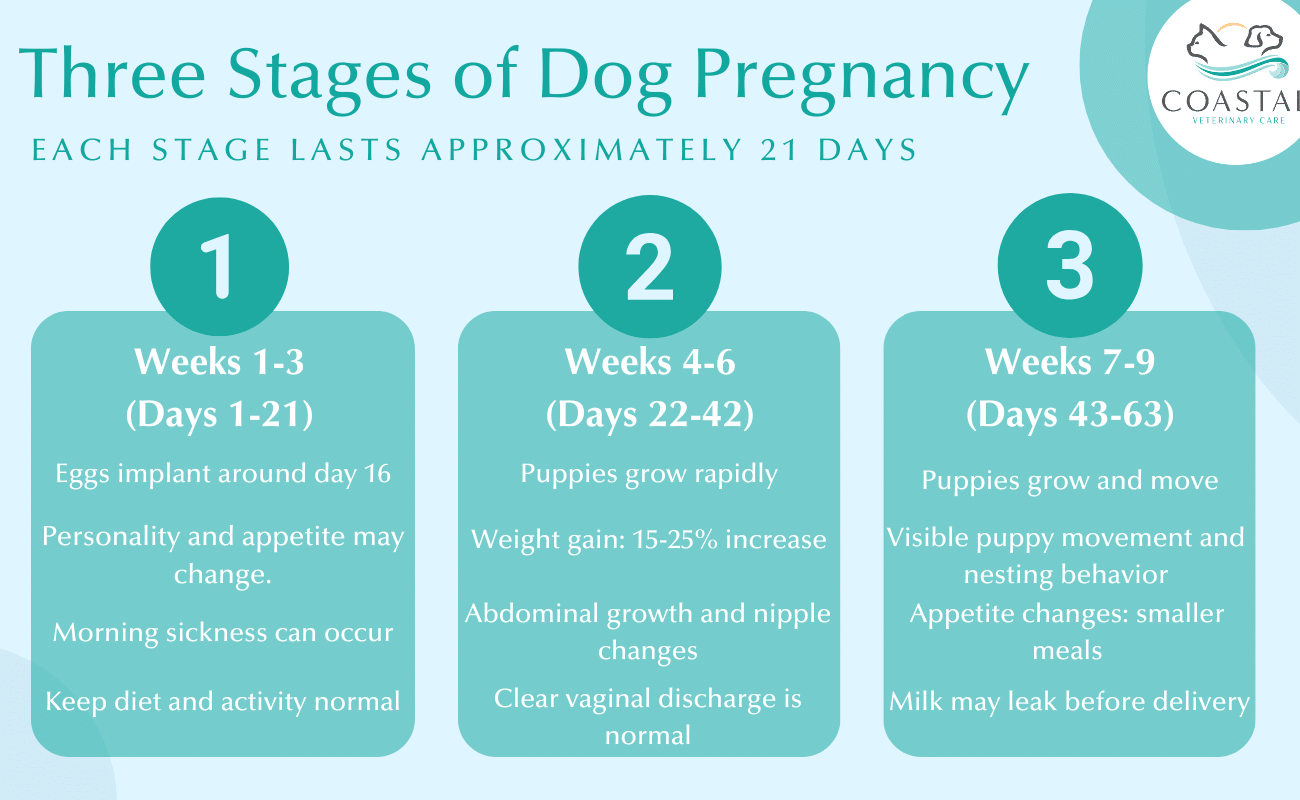
Stage One: Weeks 1-3 (Days 1-21)
During the first stage, fertilized eggs travel through the fallopian tubes and implant in the uterine wall around day 16. Most dogs show few outward signs during this time.
You may notice subtle changes including:
- Slight personality shifts: Some dogs become more affectionate or seek extra attention.
- Mild appetite changes: Your dog may eat slightly less or show food preferences.
- Morning sickness: A small percentage of dogs experience nausea, though this is less common than in humans.
At this stage, continue feeding your dog her regular diet. Avoid excessive exercise but maintain normal activity levels.
Stage Two: Weeks 4-6 (Days 22-42)
The second stage brings more noticeable changes as the developing puppies grow rapidly. This is when most owners first confirm their dog’s pregnancy through veterinary testing.
Physical changes during stage two:
- Weight gain: Your dog will begin gaining weight, typically increasing 15-25% over her pre-pregnancy weight.
- Abdominal growth: The dog’s abdomen becomes noticeably larger as puppies develop.
- Nipple changes: Mammary glands enlarge and nipples become more prominent as milk production begins.
- Clear vaginal discharge: A small amount of clear discharge is normal.
Around day 25-28, your veterinarian can perform an ultrasound scan to confirm pregnancy and detect fetal heartbeats. By day 28-30, abdominal palpation may reveal the developing puppies, though this should only be performed by trained professionals.

Stage Three: Weeks 7-9 (Days 43-63)
The final stage prepares both mother and puppies for birth. Puppies are fully formed and continue gaining size and strength.
What to expect:
- Visible puppy movement: You may see puppies moving within the dog’s abdomen.
- Nesting behavior: Your dog will seek quiet, safe spaces and may arrange bedding.
- Appetite changes: She may eat smaller meals more frequently as stomach space decreases.
- Milk production: Milk may leak from nipples as delivery approaches.
Around day 45, your veterinarian can take X-rays to count the puppies and assess their size. This helps predict potential complications during delivery.
Caring for Your Pregnant Dog
Providing proper care throughout your dog’s pregnancy supports her health and gives the puppies the best start.
Nutrition and Feeding
Your pregnant dog’s nutritional needs change as pregnancy progresses. During the first four weeks, continue her regular high-quality food. Starting around week five, gradually transition to a puppy food formula, which provides the extra calories and nutrients she needs.
By the final weeks, she may need 25-50% more calories than usual. Feed smaller, more frequent meals since the growing puppies compress her stomach.
Exercise and Activity
Moderate exercise remains beneficial throughout most of pregnancy. Short walks help maintain muscle tone and prevent excessive weight gain. Avoid strenuous activity, jumping, and rough play, especially in the final weeks.
Veterinary Care
Schedule a veterinary visit once you suspect pregnancy. Your vet can confirm pregnancy, estimate the due date, and identify any potential issues early. Additional checkups around weeks 4-5 and week 7-8 allow monitoring of the developing puppies and the mother’s health.
Preparing for Whelping
As your dog approaches her due date, preparation makes the birthing process smoother for everyone.

Setting Up a Whelping Box
Introduce a whelping box 1-2 weeks before the expected delivery date. Choose a quiet, warm location away from household traffic. The box should be large enough for your dog to lie comfortably but have sides high enough to contain the newborn puppies.
Line the box with clean towels or blankets that can be easily washed. Allow your dog to spend time in the box before labor so she feels comfortable there.
Signs Labor Is Approaching
Watch for these indicators that birth is near:
- Temperature drop: Rectal temperature drops below 99°F (normal is 101-102.5°F) about 24 hours before labor.
- Restlessness: Pacing, panting, and inability to settle.
- Nesting intensifies: Digging at bedding and rearranging the whelping area.
- Loss of appetite: Many dogs refuse food within 24 hours of delivery.
- Vaginal discharge: Clear or slightly bloody discharge indicates labor is beginning.
When to Call Your Veterinarian
Contact your vet immediately if you notice:
- Strong contractions for more than 30 minutes without producing a puppy
- More than two hours between puppies
- Green or foul-smelling vaginal discharge before the first puppy
- Signs of extreme pain or distress
- Pregnancy extending beyond day 65
Coastal Veterinary Care: Supporting Your Dog’s Healthy Pregnancy
Watching your dog go through pregnancy is an exciting experience. With the right care and preparation, you can help her have a healthy pregnancy and welcome her puppies safely.
At Coastal Veterinary Care in Myrtle Beach, our compassionate team provides the support and guidance you need throughout your dog’s pregnancy journey. From confirming pregnancy with diagnostic testing to monitoring the developing puppies through ultrasound, we partner with you to give your expecting pup outstanding care.
If you suspect your dog may be pregnant or have questions about canine pregnancy care, contact Coastal Veterinary Care today to schedule an appointment.
Choose Coastal Veterinary Care in Myrtle Beach, SC
At Coastal Veterinary Care, we can help you determine an appropriate veterinary schedule that best supports your pet’s needs. From planning regular routine visits to understanding what to look for to identify when your pet may need to be seen to evaluate a specific injury or illness, we are here to help you make sure your pet gets the best possible care. Contact us today to learn more about why we are a trusted choice among pet owners in the Myrtle Beach, SC, area or to schedule an appointment!